
How to get the most out of your CGM Experiment
October 22, 2025
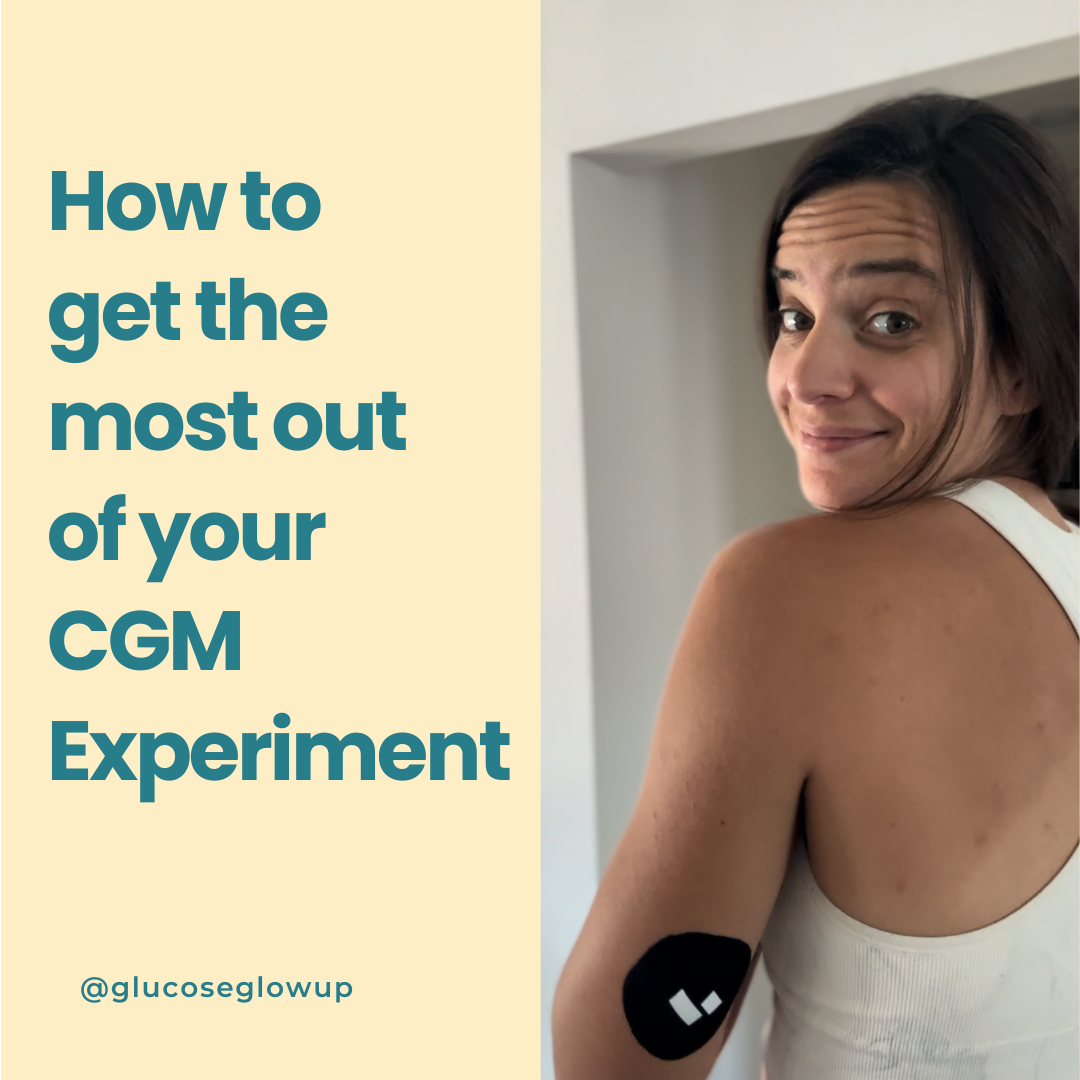
If you’ve been hearing more about continuous glucose monitors (CGMs) lately, you’re not alone. What was once a tool used primarily for people with diabetes has now gained popularity among those looking to optimize energy, balance hormones, and better understand how food impacts their body in real time.
In this episode of The Glucose Glow Up Show, we’re diving into how to get the most out of your CGM experiment, whether you’re brand new to tracking or ready to dig deeper into your data.
Listen where you get your podcasts or on Apple and Spotify!
What Is a CGM (and Why It’s Popular Now)
A Continuous Glucose Monitor (CGM) is a small sensor worn on your arm or abdomen that tracks glucose levels 24/7. It gives you real-time feedback on how your body responds to what you eat, how you move, and even how you sleep or manage stress.
Non-diabetics are using CGMs now because they offer powerful insight into metabolic health — helping you connect the dots between what’s on your plate and how you feel. It’s not about restriction; it’s about awareness.
My Experience Getting Started
When I started experimenting with a CGM, I didn’t change a thing at first. I wanted to see what my “normal” looked like, how my current habits impacted my glucose trends. That first week was eye-opening. It helped me identify the biggest opportunities for change and taught me how much factors like stress and sleep mattered.
If you’re new to tracking, here’s how I recommend approaching your first few weeks.
Your CGM Experiment Roadmap
Week 1–2: Track, Don’t Change
This is your baseline phase. You’ll want to grab a food journal and write down:
- Everything you eat or drink
- Exercise, walks, or movement
- Stress events or sleep disruptions
Keep it as real as possible. Don’t try to eat “perfectly.” You’re gathering data, not chasing perfection.
Step 2: Review and Analyze
Once you have a week or two of data, look for patterns. Ask yourself:
- Which meals cause larger glucose spikes?
- Do I feel “hangry” at certain times of the day?
- Am I skipping meals or eating distracted?
- How does dinner impact my fasting glucose the next morning?
- What’s the effect of exercise or stress on my numbers?
From there, choose one new habit to test. This could be as simple as:
- Eating veggies first, then protein and carbs
- Taking a 10–15 minute walk after meals
- Aiming for 25–30 grams of protein per meal
- Eating dessert with dinner instead of later
Small changes can make a big difference.
Step 3: Refine and Rotate
Once you’ve identified a few meals that keep your glucose stable, stick with them for a while. Meal repetition helps you see how your body responds consistently and simplifies your day.
Here are two go-to breakfasts I rotate:
Breakfast 1: Egg Scramble
- 2 cups spinach
- ½ cup sliced mushrooms
- Handful of grape tomatoes
- Garlic powder + pepper
Breakfast 2: Protein Shake
- 1 cup whole milk (or preferred milk)
- 1 frozen banana
- 1 tablespoon peanut butter
- 1 scoop protein powder
Then, focus on three lunch options to rotate throughout the week:
Lunch 1: Cobb salad
Lunch 2: Air-fried chicken, Banza pasta, roasted Brussels sprouts
You can meal prep components ahead of time to make weekday lunches easier.
Step 4: Re-Test and Repeat
After a few weeks, wear your CGM again or repeat glucose testing to see how your changes are impacting your trends. This is where the real growth happens, connecting what you’ve learned to what works best for your body.
Remember, the goal isn’t a perfect flatline; it’s stability, awareness, and feeling your best.
Using a CGM can be one of the most eye-opening experiences for improving metabolic health. It’s not just about numbers, it’s about understanding your body’s unique responses and building habits that support your energy, focus, and longevity.
You don’t have to overhaul your entire diet overnight. Start small, track your patterns, and build from there.
Special Offer
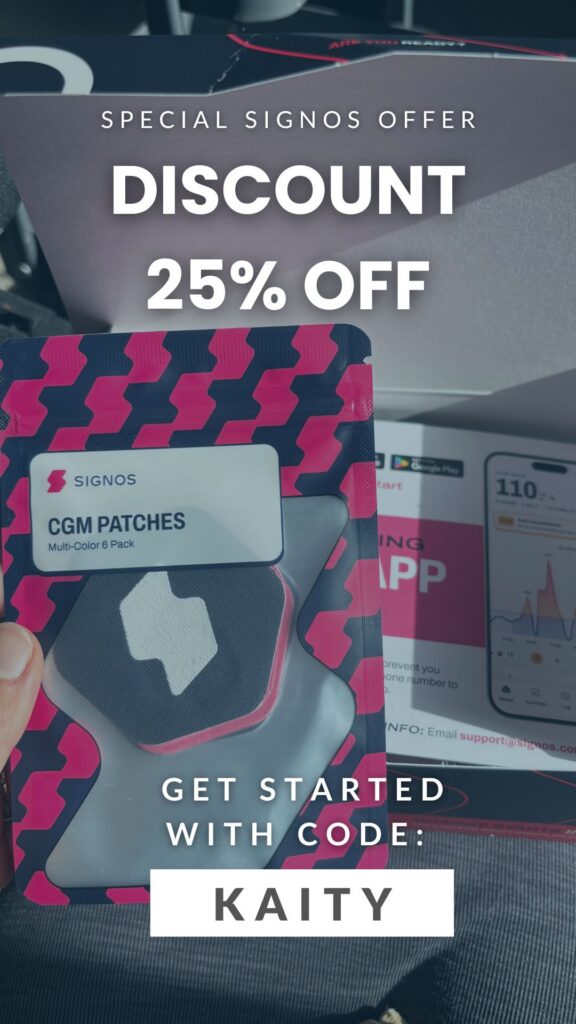
I have partnered with Signos to offer my audience 25% off their subscription. Visit their website here and enter promo code KAITY to apply the discount. Happy learning!

Leave a Reply
X
X


Not all healthy foods are created equal. Some seemingly innocent choices can send our glucose levels soaring into the diabetic range, leaving us grappling with symptoms like fatigue, irritability, brain fog and feeling hangry.
5 Healthy Foods That Might Be Spiking Your Blood Sugar
explore the podcast
I'm here to empower others to achieve balanced blood sugar levels and break the stigma that managing blood sugar is just for diabetics. Despite the challenges posed by our broken food system, there are ways to navigate it and prioritize your health.
Tune it bi-weekly
The Glucose Glow Up Show


Why am I breaking the stigma that tracking glucose is just for diabetics?
I'm Kaity! Being an athlete and health-conscious individual all my life, I've always prioritized my well-being. However, as we prepared to start our family, I discovered I had insulin resistance. Determined to overcome this obstacle, I went all in on researching metabolic health.
I've not only achieved balance in my blood sugar levels, (my glucose "glow up") but also found more energy to pour into my family. Now, I'm passionate about sharing the tools and strategies that have transformed my life so others can also experience a glucose "glow up!"
Welcome, I'm glad you're here.

Add a comment
0 comments